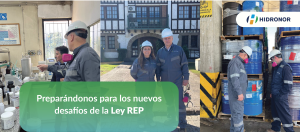


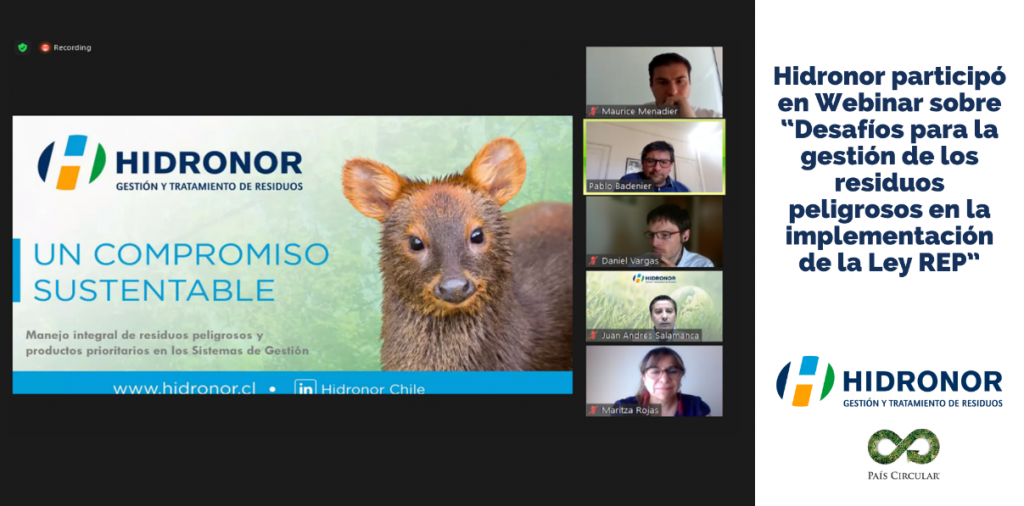
Con el objetivo de seguir promoviendo el conocimiento y cumplimiento de las actuales normativas vigentes en nuestro país para regular la gestión de residuos peligrosos, así como ahondar en cómo actúan los gestores especializados en esta materia, el pasado viernes 10 de diciembre se llevó a cabo el Webinar “Desafíos para la gestión de los residuos peligrosos en la implementación de la Ley REP”, organizado por Hidronor y País Circular.
El evento contó con la participación de distintas empresas y ejecutivos interesados en conocer más sobre estos nuevos requerimientos, además de expositores como Daniel Vargas, coordinador REP de la Oficina de Circular Economy del MMA; Maritza Rojas, CEO en Idearia; Maurice Menadier, jefe de Proyectos en Vía Limpia; y Juan Andrés Salamanca, gerente de Ventas Regionales y Marketing de Hidronor.
Durante la instancia, los expertos explicaron a los asistentes conceptos clave que son de vital importancia para el correcto proceder en nuestro país, como la diferencia entre “productor” y “generador” de residuos peligrosos (ya que la actual EPR Law. y el DS 148 imponen normativas para ambos), siendo los primeros considerados como “productores” al importar y comercializar (o importar y hacer uso inmediato del mismo) elementos industriales que finalmente son convertidos en residuos; en tanto, los “generadores” son considerados aquellos que finalmente tienen en sus manos el residuo peligroso final, y deben ponerse en contacto con las correctas instituciones para disponer responsablemente de los mismos.
In addition, they made clear that the goals established by the EPR Law for hazardous waste classified as "priority products": lubricating oils; batteries, electrical and electronic appliances; car batteries; Containers and packaging; and tires, also highlighting the alarming figures which is why it is so necessary to fully comply with these guidelines today.
“Chile currently produces approximately 23 million industrial wastes per year, where 13 million are classified as non-hazardous, 8 million come from homes, and 0.62 million correspond to hazardous waste. For this reason, it is necessary for companies to start working with Integrated Management Systems (IMS) that allow them to take charge in a proactive and responsible way, always aiming to improve the sustainability of the country we live in”, highlighted Juan Andrés Salamanca.
“In order to give support, in our country there are various alternatives for companies dedicated to the management and treatment of industrial and hazardous waste, such as Hidronor, where we remain at the forefront to offer our clients quality services across the entire national territory”, he added.
To finalize, a round of questions was held where the experts cleared up important doubts to the attendees in order to clarify the information presented, the meeting concluded with the satisfaction of all the attendees.
We invite you to review the full webinar at
https://www.youtube.com/watch?v=L98EO_MK3wY&ab_channel=HidronorChile