


Un gran porcentaje de las empresas en Chile, indistintamente del rubro en el que se desempeñen, genera residuos peligrosos que, por normativa del Ministerio de Salud (DS 148) deben ser dispuestos o tratados correctamente a fin de impactar lo menos posible al medio ambiente.
This decree establishes the minimum health and safety conditions to which the generation, possession, storage, transportation, treatment, reuse, recycling, final disposal and other forms of disposal of hazardous waste must be submitted, dictating the guidelines that each company must comply with to act responsibly and in accordance with the provisions of the law.
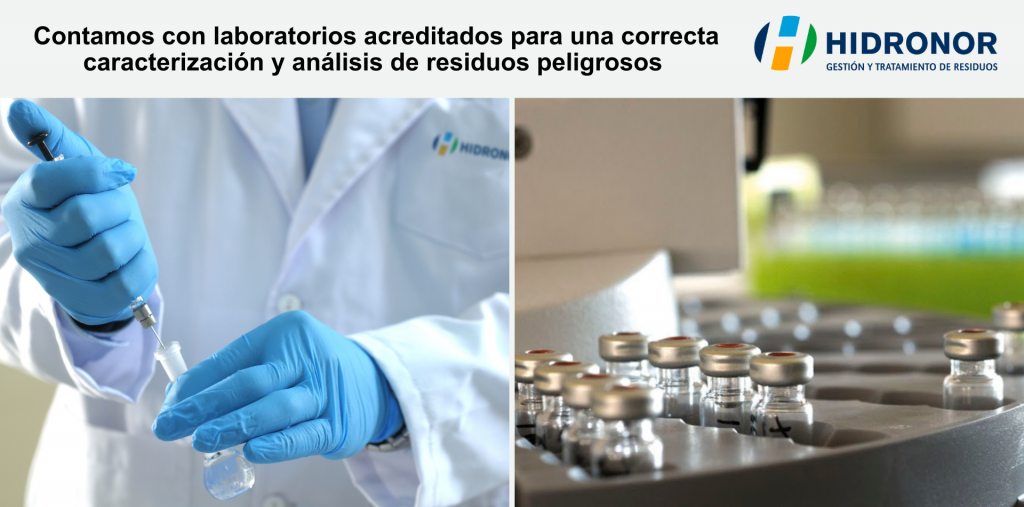
In order to correctly meet this requirement, companies with great expertise and the necessary accreditations must be used to ensure process reliability and quality, and one of the most complete alternatives in the market are Hidronor’s laboratories in terms of technical capacity and the know-how for which we have international accreditation under the know-how are the Hidronor laboratories, in which we have international accreditation under the ISO 17025 standard issued by the Center of Experts in Environmental Analysis of Quebec, CEAEQ, Canada.
Juan Ramírez, jefe Corporativo de Laboratorios de Hidronor Chile, destaca que “en Hidronor disponemos de tres laboratorios ubicados en la zona norte, centro y sur del país, y cinco tipos de servicios de caracterización de residuos”, que son:
- Hazard determination: Based on EPA (United States Environmental Protection Agency) standards, at Hidronor we determine the hazardousness of waste, such as: corrosiveness; pH measurement and corrosion rate; reactivity tests; measurement of hydrocyanic acid and hydrogen sulfide; extrinsic toxicity via the toxicity characteristic leaching procedure (TCLP); determination of flammability; determination of flash point in liquids, according to Pensky Martens closed cup tests, and flammability of solids present in waste according to the current legislation (DS148), among others.
- Heavy metal analysis in RILes and RISes, which we carry out applying the methodology of X-ray fluorescence spectroscopy and inductively coupled plasma optical emission spectroscopy for the quantification of heavy metals.
- Characterization of alternative fuels: Los aceites usados y residuos que llegan a nuestras plantas y que cuentan con características de potencia calórica son analizados con un equipo calorimétrico, y, en caso de cumplir con las condiciones exigidas por la industria (porcentaje de agua, punto de inflamación y metales por FRX), son valorizados y vendidos como combustible alternativo a empresas cementeras, entre otras.
- Determination of PCBs: We rely on the required Certification to determine Polychlorinated Biphenyl compounds (PCBs) by gas chromatography with an Electron Capture Detector GC-ECD. PCBs are characterized by being very harmful to living organisms due to their high toxicity and therefore must be exported to Europe for their proper disposal (a service we offer at Hidronor).
- Analysis of organic compounds using the GC-MS analytical technique, determining the volatile and semi-volatile organic compounds, such as solvents, pesticides, herbicides, among others that residue may contain in order to determine alternative treatments and/or final disposal for each one of them.
“Thanks to this wide coverage of analysis and characterization of waste, in addition to the team of experts we rely on, at Hidronor we have become a strategic environmental partner for companies with the aim of working together to contribute to environmental sustainability, reducing the environmental impact with the treatment and correct disposal of hazardous waste”, concludes Ramírez.