

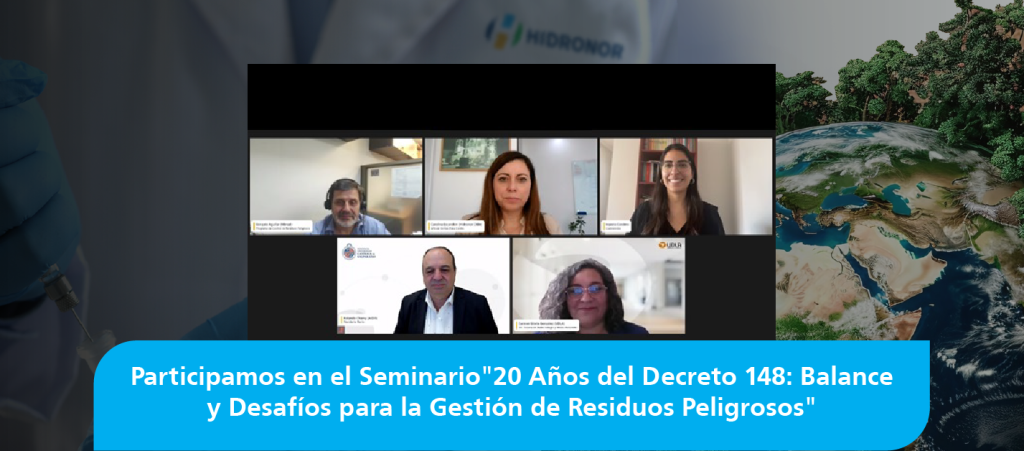

We highlight our commitment to sustainability and the circular economy within the framework of the 20 years of Decree 148, an event organized by the University of the Americas and Codexverde.
It is estimated that Chile produces close to 19 million tons of waste per year, according to data from the Ministry of the Environment. Of this waste, approximately 650,000 tons are hazardous. However, only 21% of non-hazardous waste was recovered in 2010, which underlines the need to improve recovery rates and management of this waste in the country. Furthermore, there are no official figures that reflect the recovery rates of hazardous waste, which makes it difficult to evaluate the effectiveness of current policies.
En ese contexto, y como una forma de visualizar esta problemática, el pasado lunes 28 de octubre, se llevó a cabo el seminario online «20 Años del Decreto 148: Balance y Desafíos para la Gestión de Residuos Peligrosos», evento que reunió a expertos y empresas del sector para discutir los avances y retos en la gestión de residuos peligrosos en Chile.
Commitment to Sustainability
Carolina Escandón, Head of Sales in the Central Zone of Hidronor Chile, was one of the notable speakers. In his speech, he highlighted that, although in 2010 only 21% of non-hazardous waste was recovered, it is crucial to increase recovery rates, especially in hazardous waste, which represents approximately 650,000 tons annually without official figures to support its recovery.
He also highlighted that “at Hidronor, with more than 25 years of experience in the sector, we have established ourselves as a benchmark in the management of hazardous waste. We have been managing hazardous waste for more than 25 years. We have managed and treated more than 500,000 tons of contaminated soil. We have received and managed more than 7 million tons of industrial and hazardous waste in our plants, with more than 2,500 committed clients.”
Transformación hacia la Circular Economy
Bajo el lema «Transformación de Residuos Peligrosos: De la Disposición Segura a la Economía Circular», nuestra compañía presentó su enfoque innovador para convertir residuos en recursos.
En ese contexto de la valorización de residuos, Escandón aseguró que “nuestra compañía, anualmente, generamos más de 5.000 toneladas al año de combustible alternativo líquido. Gestionamos más de 3.000 toneladas de plásticos y envases, más de 1.500 toneladas en metales y más de 800 toneladas en baterías”.
Challenges in Waste Management
El seminario también sirvió como plataforma para plantear desafíos importantes en la gestión de residuos. Escandón subrayó la necesidad de fomentar la cultura y educación en materia de residuos peligrosos, así como aumentar las tasas de valorización en residuos industriales y peligrosos. La declaración SIDREP, que busca mejorar la información disponible sobre la gestión de residuos, fue uno de los temas discutidos.
At Hidronor we reaffirm our commitment to contributing to the care of the environment and the sustainable development of the country through management practices that not only comply with current regulations, but also promote a cleaner and safer future for all.