

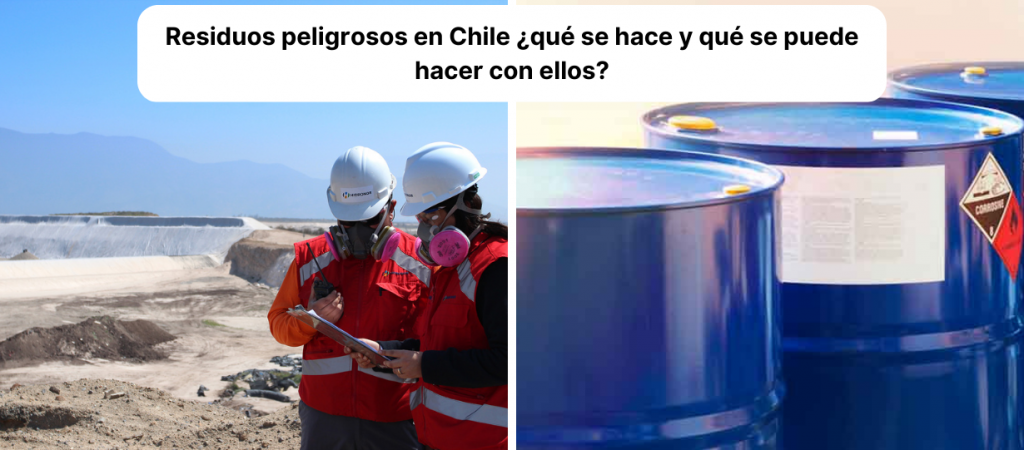

Next year will be an important date for hazardous waste in Chile, since it will be two decades since Decree 148 of the Ministry of Health established the minimum sanitary and safety conditions for the management of this type of material. That is, for its "generation, possession, storage, transportation, treatment, reuse, recycling, final disposal, and other forms of elimination."
Sobre ello, nuestra subgerente comercial de Hidronor, Denisse Triviños Mancilla, destaca que “la gestión, fiscalización y responsabilidad sobre los residuos peligrosos en Chile ha ido cobrando mayor relevancia a partir del DS 148 (…) A la fecha se ha avanzado una enormidad y actualmente contamos con altos estándares de tratamiento, trazabilidad y control en relación a ellos”.
The issue is not minor if one considers that in 2021 almost 650,000 tons of hazardous waste (Respel) were generated in the country, and the three previous years were around 600,000, according to figures from the Register of Emissions and Transfers of Pollutants (RETC) of the Ministry of the Environment (MMA), so to manage them correctly it is necessary to implement a management plan.
"The management plan allows generators to optimize their processes and have complete traceability of their waste in order to implement control measures or segregation at source to improve, for example, their recovery," adds Triviños.
To learn more about this topic, considering specific treatments for each type of hazardous waste, recycling of contaminated packaging and generation of alternative fuels, we invite you to read the most comprehensive interview conducted with our executive by País Circular.